

How do you define the word “translate”? If you currently live or have lived in a family where more than one language is spoken, you may have found yourself in the position of being a translator for a family member who needs help navigating the linguistic demands of daily living. A memo comes from school. A newsletter arrives from a neighborhood association. A legal document needs to be understood and signed. And the list goes on and on. You, as the person most proficient in the target language, exercise “the power of the word.”
For a long time, the work and mission of Wycliffe Bible Translators have mightily impressed me. Using the time, talents, and determination of ordinary folks they have painstakingly brought the Gospel message of the Holy Bible to innumerable people groups in a form they can understand. Their work involves communicating in the group’s “heart language” or in other words the language they can best understand. It may be a written language. Or an aural one for those who need to hear it. Or pictographs for those who rely on pictures to gain insights. Or tactile interpretation for those who need to touch the words. Or “story booking” designed especially for children.
If you belong to a major language group and have many translations of the Scriptures from which to choose, you may not understand the hunger many people of the world have to become acquainted with their Creator. Nor may you comprehend the joy when Wycliffe Bible Translators satisfy that hunger.
I am not receiving any compensation for this writing. I am simply trying to use the “power of the word” from my Blog Post platform (Nonny’s Blog) to spread truth, hope, and love.
The photo I am sharing with you as my main focal image is from a recent issue of a newsletter from Wycliffe Bible Translators. It shows a people group so over-joyed with the anticipation of the dedication of the Holy Bible’s New Testament in their own language that more than 2,000 of them hiked for days from their villages to be a part of this celebratory occasion.
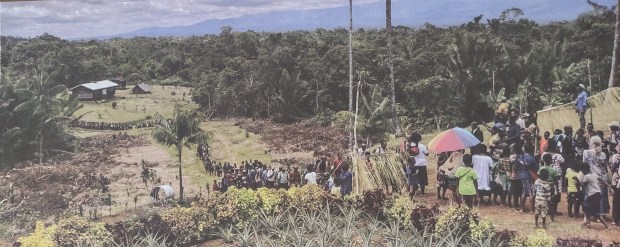
In 1984 two villagers from this area began their translation with pencil and paper. Finally, forty years later, on February 17, 2024, the translation team presented a completed New Testament to their community in a worship service of prayer, praise, music, testimonies, and speeches. They also gave out New Testaments to local pastors to distribute in their churches.
Just as is described in the New Testament story of Pentecost in Acts 2:1-31, one day all people will hear God’s Word in their own language. Wycliffe Bible Translators are working toward that goal.
How a Special Word Has Power
Connie Carlisle Polley, 2025
ConnieCarlislePolley.com
NonnyDay.com
 Nonny's Blog